
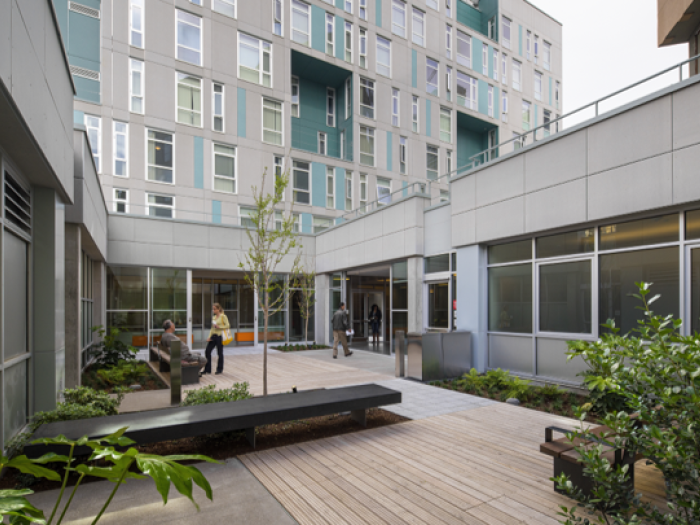
HOME-SF
HOME-SF is a local density bonus program for housing projects. The program allows eligible projects to build more housing and provides benefits such as priority processing, increased height, and flexibility from certain zoning requirements.
As of August 22, 2026, HOME-SF requires projects to provide 7-10% of their residential units as affordable housing. Additional eligibility requirements apply based on the project’s location and characteristics, as outlined below.
How it Works
HOME-SF is an optional program for developers constructing mixed-income housing projects in certain areas of San Francisco. Under HOME-SF, 7 to 10 percent of the units in a new housing project must be affordable to low and moderate-income families. To provide more family friendly housing, 40 percent of the total units in the building must be two bedrooms or larger (with an additional option of providing 50% of all bedrooms in the project in units with 2 or more bedrooms). In return, density bonuses and zoning modifications are provided, allowing project sponsors to accommodate additional affordable units.
The following tiers are applicable to HOME-SF projects:
| Additional height awarded above existing height limit | On-site affordability requirement | |
Tier 1 | No additional height | 7 % |
Tier 2 | 1 story | 8% |
Tier 3 | 2 stories | 10% |
What is a Density Bonus?
A density bonus is an increase in the overall number of housing units that a developer may build on a site in exchange for including more affordable housing units in the project. Under HOME-SF, the maximum bonus for a project is an additional two stories and relief from density controls.
To be eligible for the HOME-SF program, each project:
- Must not demolish any residential units
- Will consist of new construction only and will not propose additions to existing buildings
- Must provide three or more dwelling units
- Must not demolish or significantly alter a historic resource
- Must not alter wind or create new shadow in a manner that substantially affects outdoor recreation facilities or other public areas as determined by the Environmental Review Officer
HOME-SF is not applicable in the RH-1 or RH-2 Zoning Districts, and is restricted in a number of other areas. For detailed eligibility criteria, see the HOME-SF Program Supplemental application under the Supporting Info tab.
If your project does not qualify for HOME-SF, it may still qualify for the Housing Choice SF Program or the Individually Requested State Density Bonus Program.
HOME-SF projects require an entitlement called “HOME-SF Project Authorization” pursuant to Section 328 of the Planning Code. A HOME-SF Project Authorization entitlement requires a Planning Commission hearing within 120 days of submission of a complete HOME-SF application that is determined to meet the eligibility criteria. Public comment is welcomed at every Planning Commission hearing.
Staff will complete a design review for every project that chooses to participate in the HOME-SF program. This review will include the various dimensions, including height, setbacks, and other standard design considerations to ensure the completed project respects the surrounding context and keeps with the character of the neighborhood and commercial corridors.
For additional information on the application and the process, please view:
Small Businesses
HOME-SF requires project sponsors to provide at least 18 months advance notice of a proposed project to any existing commercial tenants on the site. HOME-SF also requires that any potentially displaced commercial tenants be connected with the Mayor's Office of Economic and Workforce Development (OEWD), which offers relocation assistance and support.
What are HOME-SF's affordability requirements?
Project sponsors that choose HOME-SF are required to offer 7-10% of units in their housing project at prices or rents affordable to low and moderate-income families. Individuals and families can qualify for these units based on their income, measured in percent of Area Median Income (AMI). Currently, the affordable units are required to be affordable to the following income categories:
Rental Projects
| Tier 1 | Tier 2 | Tier 3 | |
| 55% AMI | 5% | 6% | 8% |
| 80% AMI | 2% | 2% | 2% |
Ownership Projects
| Tier 1 | Tier 2 | Tier 3 | |
| 80% AMI | 5% | 6% | 8% |
| 100% AMI | 2% | 2% | 2% |
What is Area Median Income (AMI)?
Find the latest on AMI in San Francisco.
AMI is set each year by the US Department of Housing and Urban Development (HUD) and is based on household size and the income households earn in the area. The City uses these annually published income limits to inform its various housing programs.
See the Mayor's Office of Housing and Community Development (MOHCD) for more information about who qualifies for affordable housing.
Who qualifies for affordable units in HOME-SF projects?
Eligibility for affordable units is determined by a household's size (number of people in the household) and income (amount of income earned by all members of the household).
Visit MOHCD for more information on the rental and ownership programs.
How much will the affordable units in HOME-SF projects be sold or rented for?
Units will be priced according to size (number of bedrooms) and the income level of the household that will be occupying the unit.
Visit MOHCD for more information on the rental and ownership programs.
| Date | Legislation/Resolutions/Motions and Staff Case Reports | Presentation Materials and Video |
|---|---|---|
| July 21, 2026 | Full Board of Supervisors Board File 260538 was passed with a vote of 9-2 to reduce the affordability rates for HOME-SF projects. | SFGov TV video on demand |